

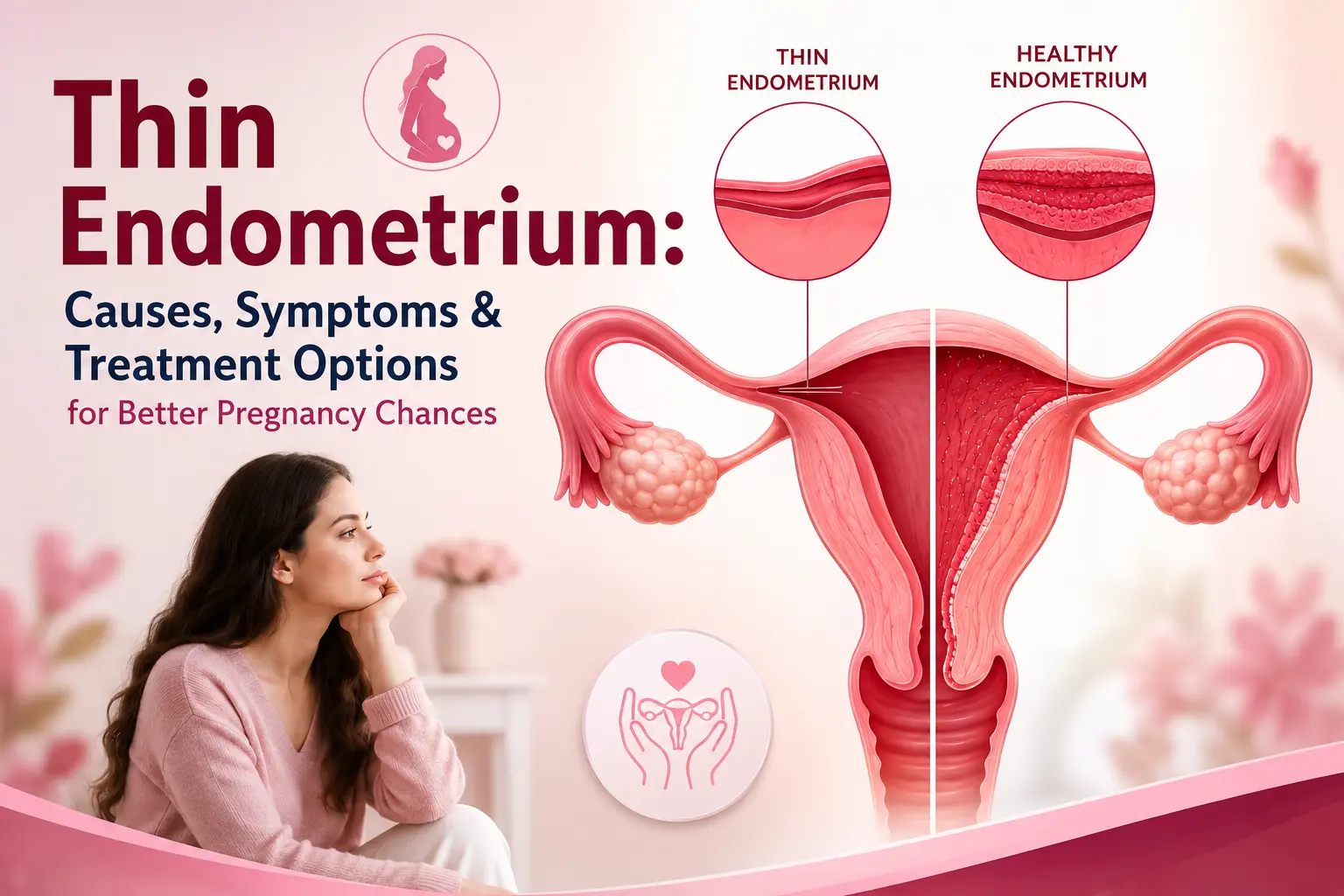
The endometrium is the soft inner lining of the uterus. Every month, it grows and prepares for a possible pregnancy. During IVF, an embryo is placed inside the uterus, where it must attach to this lining and continue growing. This process is called implantation.
When the lining does not grow as expected, doctors may call it a thin endometrium. A thin uterine lining and IVF can be worrying for patients because the lining helps support embryo implantation.
However, having a thin lining does not always mean that pregnancy is impossible. The patient’s age, embryo health, hormone levels, uterine condition and previous treatment results also play important roles.
What Is Considered a Thin Endometrium?
Doctors usually measure the uterine lining through a transvaginal ultrasound before an embryo transfer. The measurement is recorded in millimetres.
There is no single measurement that guarantees pregnancy, and experts do not agree on one exact definition of a thin endometrium. Many fertility clinics feel more comfortable when the lining is around 7 mm or more. However, pregnancies can sometimes happen with a thinner lining.
Doctors may also examine the appearance and pattern of the lining, hormone levels and the patient’s medical history. Therefore, when patients search for the ideal endometrial thickness for pregnancy, they should remember that thickness is only one part of the complete assessment.
Can a Thin Uterine Lining Affect IVF Success?
An embryo needs a healthy and receptive place to attach. Research has generally found that pregnancy and live birth rates may become lower as the endometrium becomes thinner.
However, there is no particular thickness at which pregnancy becomes impossible for every patient.
A thin lining may also point to another condition. For example, scar tissue inside the uterus may prevent the lining from growing properly. In other cases, the patient’s body may not respond well to the hormones used during IVF.
A fertility specialist should therefore look for the possible cause instead of focusing only on the ultrasound measurement.
Does a Thin Endometrium Cause Symptoms?
A thin endometrium often does not cause any clear symptoms. Many women only learn about it during an ultrasound performed as part of fertility treatment.
Some women may have very light or short periods. However, light periods do not always mean that the uterine lining is thin. Menstrual flow naturally differs from one woman to another.
An ultrasound and medical evaluation are required to understand whether the lining is suitable for embryo transfer.
Common Causes of a Thin Endometrium
1. Low Oestrogen Levels
Oestrogen helps the uterine lining grow during the first part of the menstrual cycle. If oestrogen levels are low, or if the endometrium does not respond properly to the hormone, the lining may remain thin.
2. Scar Tissue Inside the Uterus
Scar tissue or adhesions may develop after certain uterine procedures, miscarriage treatment, infection or surgery.
Severe uterine adhesions are sometimes called Asherman syndrome. Scar tissue may reduce the area where a healthy uterine lining can grow.
3. Inflammation or Infection
Long-term inflammation of the uterine lining is sometimes known as chronic endometritis. It may affect the environment inside the uterus and may not always cause noticeable symptoms.
4. Reduced Blood Flow
Healthy blood flow supplies the uterus with oxygen and nutrients. Reduced blood flow may be connected with poor lining development in some patients.
5. Previous Pelvic Treatment
Previous radiation treatment or damage involving the pelvic area may affect the uterus and endometrium.
6. Natural Variation
Some women repeatedly develop a thinner uterine lining even when no clear medical cause is found. In these cases, doctors may review previous IVF cycles, embryo quality and pregnancy history before deciding the next step.
How Is a Thin Endometrium Diagnosed?
The first test is usually a transvaginal ultrasound. This test shows the thickness and appearance of the endometrium.
Depending on the patient’s history, a fertility specialist may also recommend:
- Hormone blood tests
- Saline sonography
- Hysteroscopy
- Tests for infection or inflammation
During hysteroscopy, a thin camera is used to examine the inside of the uterus. It can help identify scar tissue, polyps, certain fibroids or other changes in the uterine cavity.
Not every patient needs all these tests. The investigation should be selected according to the patient’s symptoms, medical history and previous IVF results.
How to Improve Uterine Lining for IVF
Patients commonly search for how to improve uterine lining for IVF. However, there is no single method that works for every patient. The correct approach depends on the cause of the thin lining.
Adjusting Oestrogen Treatment
A fertility specialist may change the dose, duration or method of oestrogen treatment.
Oestrogen may be given through tablets, patches, gels or injections. Patients should never change their fertility medicines without consulting their doctor.
Allowing More Preparation Time
Some patients may need additional time for the uterine lining to grow before progesterone is started.
The doctor may continue monitoring the lining and hormone levels before selecting the embryo transfer date.
Freezing Embryos and Delaying Transfer
If the uterine lining is not suitable during a fresh IVF cycle, the embryos may be frozen and transferred during a later cycle.
This allows the fertility team to prepare the uterus again without repeating the egg collection procedure.
Treating Problems Inside the Uterus
If hysteroscopy shows scar tissue, a polyp, certain fibroids or another condition inside the uterus, treatment may be recommended before embryo transfer.
Treating the underlying condition may help create a healthier space for implantation.
Treating Confirmed Infection
When tests confirm an infection or inflammation, the doctor may prescribe appropriate medicine.
Patients should not take antibiotics or other medicines without proper testing and medical advice.
Considering Additional Treatments Carefully
Platelet-rich plasma, growth factors, sildenafil and other treatments are sometimes discussed for patients with a repeatedly thin endometrium.
However, evidence for many of these additional treatments is still limited or mixed. Patients should ask about the possible benefits, risks, cost and scientific evidence before choosing them.
Can Lifestyle Improve the Uterine Lining?
A balanced diet, regular physical activity, enough sleep and avoiding smoking can support general reproductive health.
However, no particular food, drink, supplement or home remedy can guarantee a thicker endometrium or a successful IVF result.
Patients should inform their fertility doctor about every medicine and supplement they are taking. Products promoted online as natural fertility boosters may not have reliable scientific evidence and may interfere with treatment.
Thin Endometrium Treatment in Kolkata at IHR IVF
Patients searching for thin endometrium treatment in Kolkata need an individual assessment rather than the same treatment plan for everyone.
At IHR IVF Kolkata, fertility specialists can review the patient’s ultrasound reports, hormone response, previous IVF cycles and the condition of the uterine cavity before recommending treatment.
IHR IVF Kolkata provides fertility services that include IVF and embryo transfer, frozen embryo transfer, hysteroscopy and other investigations that may be recommended when medically appropriate.
These services can help doctors identify factors that may be affecting implantation and create a personalised treatment plan.
A consultation may be particularly important when:
- The uterine lining remains thin during repeated cycles
- Previous embryo transfers have failed
- There is a history of uterine surgery
- The patient has experienced infection or miscarriage
- The lining does not respond to regular hormone treatment
FAQs
 Medically reviewed by
Dr. Surya Agarwal
MBBS, MD (Obstetrics & Gynaecology) · Fellowship in Reproductive Medicine
Last reviewed: June 2026
View profile
Medically reviewed by
Dr. Surya Agarwal
MBBS, MD (Obstetrics & Gynaecology) · Fellowship in Reproductive Medicine
Last reviewed: June 2026
View profile
.png) (+91) 9864103333
(+91) 9864103333 (+91) 9435502020


