

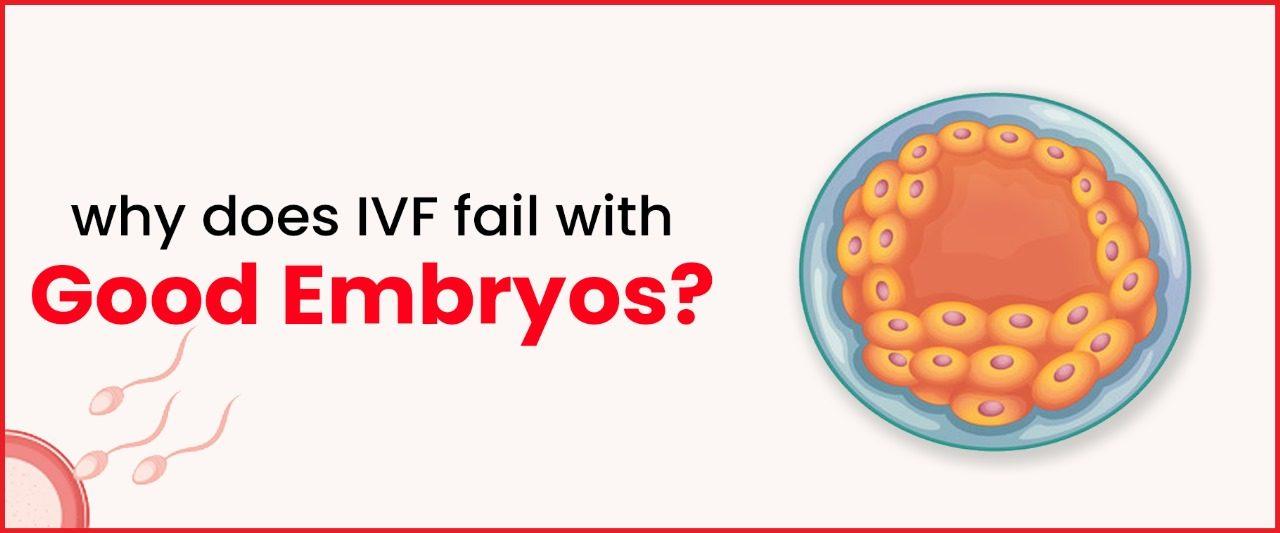
Embryo transfer is one of the most important stages of IVF. After the eggs are collected and fertilised, the embryos are observed in a fertility laboratory.
An embryologist checks how the embryos grow and gives them a grade based on their appearance and development. A good-looking embryo may then be selected for transfer into the uterus.
When pregnancy does not happen, patients often wonder why the embryo is not implanting after IVF, even though it was described as good quality.
Embryo grade is important, but it cannot predict everything. The embryo, uterine lining, hormones, transfer procedure and natural biological processes must all work together for implantation to happen.
What Does Implantation Mean?
After embryo transfer, the embryo must attach to the endometrium, which is the inner lining of the uterus. It then needs to continue developing. This process is known as implantation.
A failed embryo transfer usually means that the pregnancy test remains negative after the transfer.
One unsuccessful transfer does not automatically mean that there is a serious fertility problem. It also does not mean that future treatment will fail.
Does a Good-Quality Embryo Guarantee Pregnancy?
No. Embryo grading mainly describes how an embryo looks under a microscope and how it has developed inside the laboratory.
A good embryo grade is encouraging, but it does not prove that the embryo has the correct number of chromosomes.
An embryo may look healthy but still have a chromosome problem known as aneuploidy. Such an embryo may fail to implant or may stop developing shortly after implantation.
Chromosome problems also become more common as the age of the woman providing the eggs increases. Embryo chromosome health is therefore one of the main embryo transfer failure reasons, but it is not the only possible reason.
Common Reasons for Implantation Failure in IVF
Chromosomal Problems in the Embryo
Some chromosome changes cannot be identified through normal embryo grading.
Preimplantation genetic testing for aneuploidy, commonly called PGT-A, can check the number of chromosomes in an embryo before transfer.
However, PGT-A is not necessary for every patient, and it cannot guarantee pregnancy. A fertility specialist may discuss it based on the patient’s age, reproductive history, number of embryos and previous IVF results.
2. Problems Inside the Uterus
Polyps, certain fibroids, scar tissue, a uterine septum or other changes inside the uterine cavity may interfere with implantation.
Some uterine conditions can be seen through an ultrasound. Others may require saline sonography or hysteroscopy.
Further examination may be considered after repeated embryo transfer failure, unusual bleeding or previous uterine surgery.
3. Endometrial Lining Problems
The uterine lining must grow and become receptive at the correct time.
A very thin lining may be connected with a lower chance of implantation. Scar tissue, inflammation, polyps and other conditions may also affect the environment inside the uterus.
Doctors normally check the uterine lining through ultrasound before transfer. They may study both the thickness and appearance of the lining.
4. Hormone Timing
Progesterone helps prepare the uterine lining for implantation.
During a frozen embryo transfer, the length of progesterone treatment should match the development stage of the embryo being transferred.
When the hormone timing is unsuitable, the embryo and uterine lining may not be ready at the same time. The fertility team may review the progesterone dose, timing and hormone level in selected patients.
5. Hydrosalpinx and Other Pelvic Conditions
A hydrosalpinx is a fallopian tube that has become filled with fluid. This fluid may enter the uterus and reduce the chance of embryo implantation.
Endometriosis, adenomyosis and other pelvic conditions may also affect fertility in some patients.
Treatment depends on the condition, symptoms and test results. Surgery is not required for every patient.
6. Egg, Sperm and Embryo Development
Embryo development begins with the egg and sperm.
Poor egg quality, severe sperm problems or sperm DNA damage may affect fertilisation and later embryo development. A normal-looking embryo cannot show every possible egg or sperm-related problem.
The fertility team may review:
- The woman’s age
- Ovarian reserve
- Fertilisation rate
- Sperm test results
- Embryo development
- Embryo survival after freezing and thawing
Additional tests should only be selected when they are likely to provide useful information.
7. The Embryo Transfer Procedure
Embryo transfer is usually a short and gentle procedure. A soft catheter is passed through the cervix, and the embryo is placed inside the uterus.
A difficult transfer, uterine contractions, blood or mucus on the catheter, or unsuitable embryo placement may sometimes reduce the chance of implantation.
Ultrasound guidance is commonly used to support accurate embryo placement during the transfer procedure.
8. Medical and Lifestyle Factors
Uncontrolled thyroid disease, diabetes and certain other medical conditions may affect fertility or early pregnancy.
Smoking may also have a negative effect on reproductive health.
However, patients should not blame themselves after a failed transfer. Implantation is a complex process, and failure may happen even when every medicine has been taken correctly and every instruction has been followed.
9. Natural Chance
Human reproduction is not completely predictable.
Sometimes the embryo looks healthy, the uterus appears normal and the transfer procedure goes smoothly, but implantation still does not happen.
In some cases, no clear explanation is found. This does not mean that the next embryo transfer will also fail.
What Should Be Reviewed After a Failed Embryo Transfer?
After an unsuccessful IVF cycle, the fertility specialist may review:
- The woman’s age and ovarian reserve
- The number, stage and grade of embryos
- Fertilisation and laboratory records
- Uterine lining thickness and appearance
- Progesterone dose and timing
- Ultrasound and hysteroscopy findings
- Sperm test results
- Medical conditions and medicines
- Notes from the embryo transfer procedure
Further testing should be selected carefully.
One failed embryo transfer does not always require a long list of immune, clotting, genetic or endometrial tests. Some fertility add-on treatments are strongly promoted even though their scientific evidence remains limited.
Patients should ask whether a recommended test will provide useful information or clearly change the next treatment plan.
What Can Be Changed Before the Next Transfer?
The next treatment plan may include:
- Adjusting the ovarian stimulation protocol
- Treating a problem inside the uterus
- Changing the progesterone dose or timing
- Preparing the uterine lining differently
- Planning a frozen embryo transfer
- Discussing genetic testing in suitable cases
- Reviewing egg or sperm-related factors
- Changing the embryo transfer approach
The correct option depends on the suspected reason for failure.
No treatment can guarantee implantation. Using several unproven treatments may increase the cost and emotional pressure without improving the result.
Emotional Support After a Failed Transfer
A negative pregnancy test may cause sadness, disappointment, guilt, anger or fear. These feelings are understandable.
Patients may need some time before deciding whether to start another treatment cycle. A review appointment can help them understand what happened and what may be changed.
Support from a partner, family member, counsellor or fertility care team can also make the process easier.
IVF Treatment in Kolkata at IHR IVF
Patients searching for IVF treatment in Kolkata after an unsuccessful embryo transfer need a careful review of the complete cycle.
At IHR IVF Kolkata, fertility specialists and embryologists can examine embryo development, hormonal preparation, uterine findings and transfer details before recommending the next step.
IHR IVF Kolkata provides fertility services including IVF, ICSI, frozen embryo transfer, hysteroscopy and preimplantation genetic testing.
These services are considered according to the patient’s individual medical needs. They are not recommended in the same way for every patient.
The purpose of the evaluation is to identify factors that may be corrected, explain areas where the reason remains uncertain and develop a personalised treatment plan.
Conclusion
There are several possible embryo transfer failure reasons.
The embryo may have a chromosome problem, the uterine environment may need treatment, progesterone timing may require adjustment, or implantation may fail without a clear explanation.
A failed embryo transfer does not mean that future IVF treatment cannot succeed. Patients should have a complete medical review instead of losing hope or immediately starting unproven treatments.
IHR IVF Kolkata can review the complete IVF cycle and help patients understand the safest and most suitable next steps based on their individual fertility needs.
 Medically reviewed by
Dr. Surya Agarwal
MBBS, MD (Obstetrics & Gynaecology) · Fellowship in Reproductive Medicine
Last reviewed: June 2026
View profile
Medically reviewed by
Dr. Surya Agarwal
MBBS, MD (Obstetrics & Gynaecology) · Fellowship in Reproductive Medicine
Last reviewed: June 2026
View profile
.png) (+91) 9864103333
(+91) 9864103333 (+91) 9435502020


