

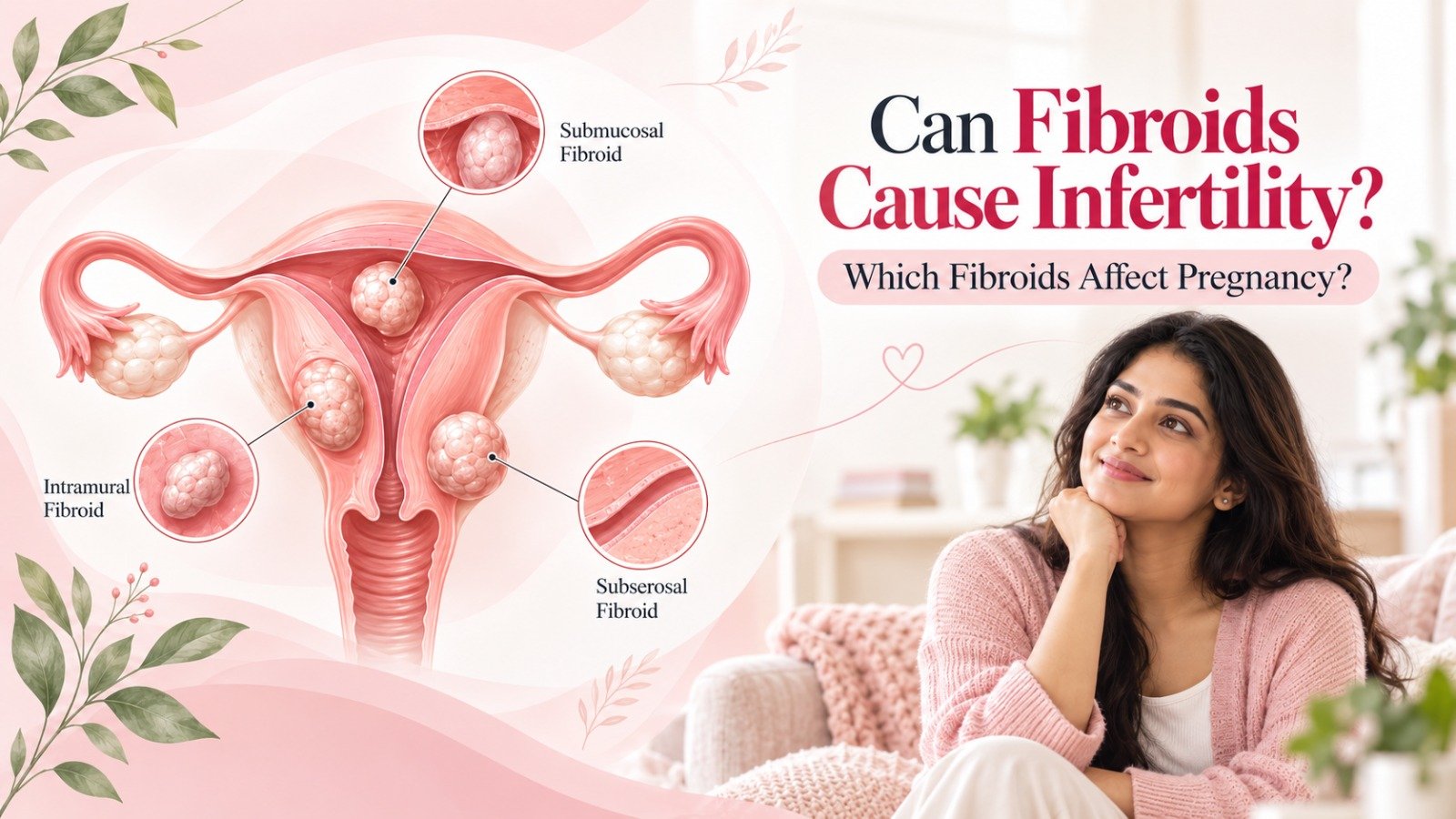
Fibroids are non-cancerous growths that develop in or around the uterus. Many women have fibroids and still become pregnant naturally. However, in some cases, the size and location of a fibroid can affect fertility, embryo implantation or pregnancy.
So, can fibroids cause infertility? Yes, they can contribute to fertility problems, but fibroids are not always the main cause. The fibroids most likely to affect fertility are those that change the shape of the uterine cavity.
Can Fibroids Cause Infertility?
Fibroids may affect fertility when they interfere with the normal shape or function of the uterus. Depending on their location and size, they may make it harder for an embryo to implant.
However, many women with uterine fibroids become pregnant without treatment.
If you are having difficulty conceiving, your fertility specialist will usually look for other possible causes too, such as:
- Ovulation problems
- Blocked fallopian tubes
- Age-related fertility changes
- Male infertility
- Low ovarian reserve
This is why fibroids should be evaluated as part of a complete fertility assessment.
Which Fibroids Affect Pregnancy and Fertility?
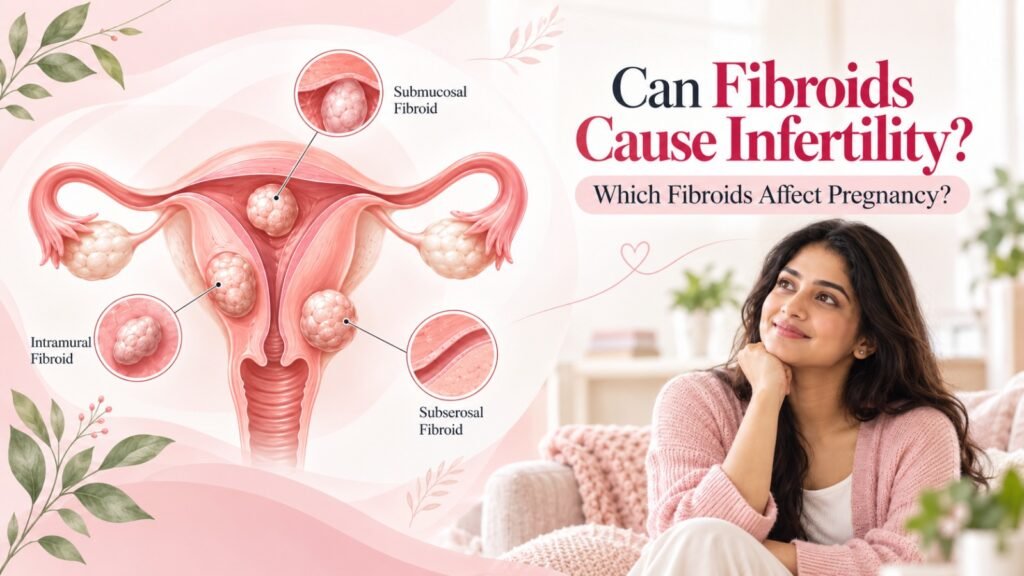
There are three main types of uterine fibroids: submucosal, intramural and subserosal fibroids.
Their effect on fertility is not the same.
Submucosal Fibroids and Infertility
Submucosal fibroids grow towards or inside the uterine cavity.
These fibroids are generally the most likely to affect fertility because they can change the shape of the cavity where an embryo needs to implant.
Submucosal fibroids and infertility may be linked because these fibroids can affect:
- Embryo implantation
- Chances of pregnancy
- The space inside the uterus
- Pregnancy outcomes in some women
Because they directly affect the uterine cavity, a fertility specialist may discuss treatment before pregnancy or fertility treatment.
Intramural Fibroids and Fertility
Intramural fibroids grow within the muscular wall of the uterus.
The effect of intramural fibroids on fertility can depend on their size and whether they push into or distort the uterine cavity.
A small intramural fibroid that does not affect the cavity may not cause a fertility problem.
A larger fibroid or one that changes the shape of the uterine cavity may need closer evaluation before trying to conceive or undergoing IVF.
Subserosal Fibroids and Pregnancy
Subserosal fibroids grow towards the outside of the uterus.
Because they usually do not affect the inside of the uterine cavity, subserosal fibroids are generally less likely to affect fertility or embryo implantation.
However, larger fibroids may still cause pressure, discomfort or other symptoms and should be evaluated individually.
How Do Uterine Fibroids Affect Pregnancy?
Having fibroids does not automatically mean you will have problems during pregnancy. Many women with uterine fibroids and pregnancy have healthy pregnancies.
Depending on their size, number and location, fibroids may sometimes be associated with:
- Pain during pregnancy
- Changes in the shape of the uterus
- Miscarriage in some situations
- Pregnancy or delivery complications
The risk is different for every woman. This is why the exact location and size of the fibroid matter more than simply knowing that a fibroid is present.
Fibroids and IVF: Can Fibroids Affect IVF Success?
Fibroids and IVF need careful evaluation because embryo implantation takes place inside the uterine cavity.
Submucosal fibroids and intramural fibroids that distort the cavity may have a greater effect on implantation.
Fibroids that do not affect the uterine cavity may not always need treatment before IVF.
Your fertility specialist may examine the uterus before starting IVF to check whether a fibroid could interfere with embryo implantation.
Do Fibroids Need to Be Removed Before Pregnancy?
No. Not every fibroid needs to be removed before pregnancy or IVF.
Treatment may depend on:
- Fibroid size
- Fibroid location
- Number of fibroids
- Whether the uterine cavity is distorted
- Heavy bleeding or pain
- Previous miscarriages
- Previous IVF or implantation problems
- Age and overall fertility health
For some fibroids that affect the uterine cavity, a procedure called myomectomy may be considered. Myomectomy removes the fibroid while keeping the uterus.
The decision should always be based on an individual fertility evaluation.
How Are Fibroids Diagnosed During an Infertility Evaluation?
Ultrasound is commonly used to identify uterine fibroids during an infertility evaluation.
Depending on your condition, your fertility specialist may recommend:
- Transvaginal ultrasound
- 3D ultrasound
- Hysteroscopy
- HSG in selected cases
- MRI when more detailed imaging is required
These tests can help determine the size and location of fibroids and whether they are affecting the uterine cavity.
When Should You See a Fertility Specialist for Fibroids?
Consider speaking with a fertility specialist if you have fibroids and:
- Have been trying to conceive without success
- Have repeated miscarriages
- Have experienced unsuccessful fertility treatment
- Have heavy or painful periods
- Have a fibroid affecting the uterine cavity
- Are planning IVF
A proper fertility evaluation can help determine whether the fibroid is actually contributing to your difficulty getting pregnant.
Fibroids and Infertility: What Should You Do Next?
Fibroids can affect fertility, but their impact depends mainly on where they are located and whether they change the uterine cavity.
If you have fibroids and are planning pregnancy, do not automatically assume that you need surgery or IVF.
A fertility specialist can evaluate your fibroids along with your ovarian reserve, ovulation, fallopian tubes and your partner’s fertility factors.
If you are looking for guidance about fibroids and infertility in Kolkata, the fertility team at IHR IVF Kolkata can evaluate your condition and help you understand the appropriate next step for pregnancy planning or fertility treatment.
.png) (+91) 9864103333
(+91) 9864103333 (+91) 9435502020


