

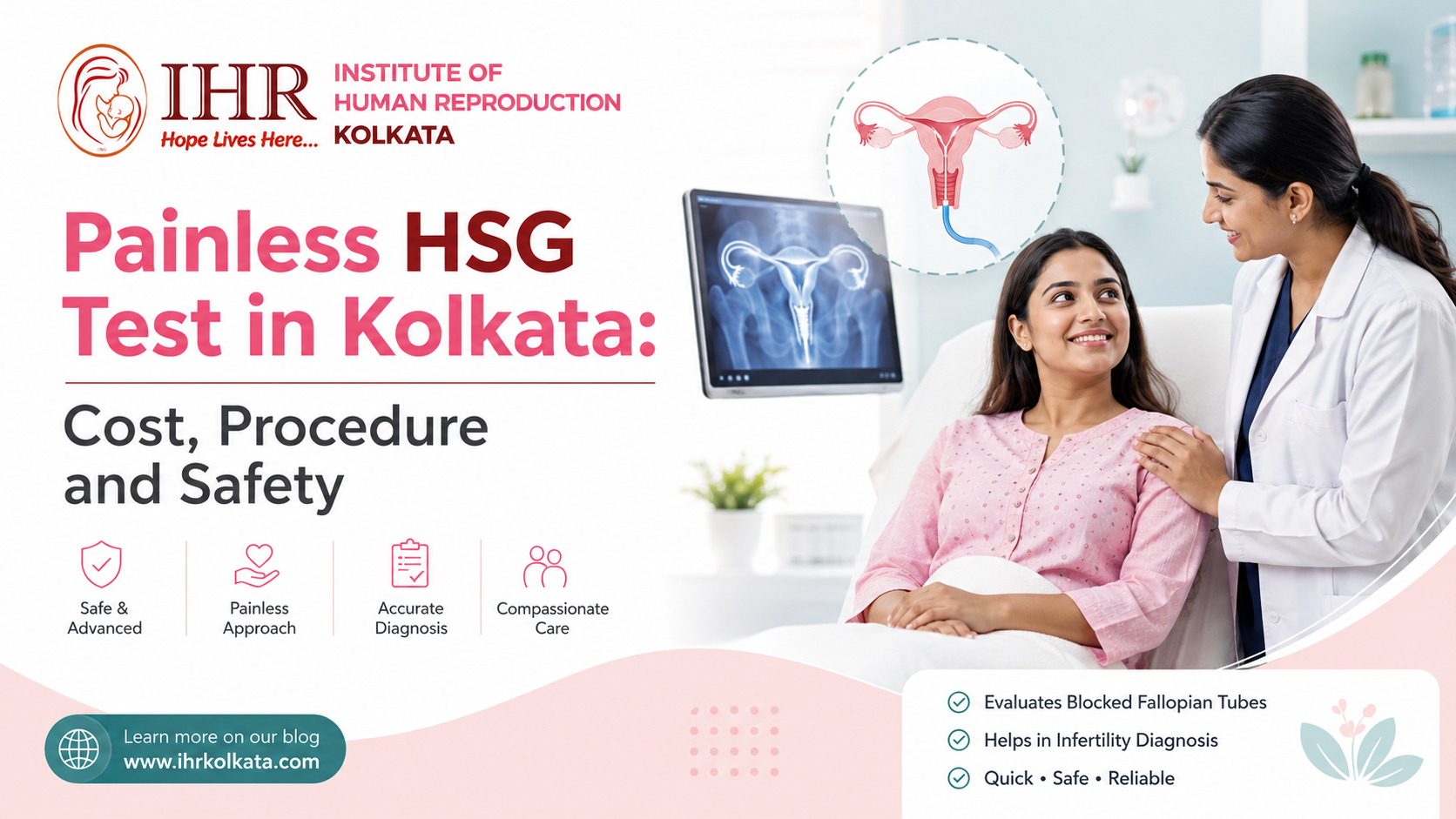
For many couples, infertility testing can feel stressful. When pregnancy does not happen naturally, doctors may suggest a few basic tests to understand the reason. One important test for women is the HSG test, also called Hysterosalpingography. If you are looking for a safe and comfortable painless HSG test in Kolkata, IHR IVF offers patient-friendly fertility diagnosis with expert medical care.
An HSG test helps doctors check the uterus and fallopian tubes. It is commonly used in fertility evaluation because blocked fallopian tubes can make it difficult for the egg and sperm to meet. HSG is an X-ray test that uses a special contrast dye to show the shape of the uterus and whether the fallopian tubes are open.
At IHR IVF Kolkata, couples receive proper guidance, advanced fertility evaluation, and compassionate support throughout their parenthood journey. The team helps patients understand the test, procedure, safety, and next steps in simple language.
What Is an HSG Test?
HSG stands for Hysterosalpingography. It is a diagnostic test used to check the inside of the uterus and fallopian tubes. During the test, a contrast dye is gently inserted through the cervix into the uterus. X-ray images are then taken to see how the dye moves.
If the dye flows through the fallopian tubes and spills out normally, it usually means the tubes are open. If the dye does not pass through, it may suggest a blockage.
This test can help doctors understand whether blocked fallopian tubes, uterine shape issues, or other structural problems may be affecting fertility.
Why Is an HSG Test Done?
An HSG test for infertility is usually recommended when a woman is unable to conceive after trying for some time. It helps the fertility specialist check whether the reproductive organs are structurally normal.
Your doctor may suggest an HSG test if you have difficulty getting pregnant, suspected blocked fallopian tubes, repeated pregnancy loss, history of pelvic infection, previous ectopic pregnancy, history of pelvic surgery, irregular fertility test results, or need for fertility treatment planning.
The HSG test gives useful information before starting treatments like IUI or IVF. If the tubes are open and other factors are normal, IUI may be considered. If the tubes are blocked, IVF may be a better option.
Why Fallopian Tubes Matter in Fertility
Fallopian tubes play an important role in natural pregnancy. Every month, an egg is released from the ovary. The sperm must travel through the uterus and reach the fallopian tube to meet the egg. Fertilisation usually happens inside the tube.
If one or both fallopian tubes are blocked, the sperm and egg may not meet. This can make natural pregnancy difficult. That is why checking tube health is an important part of fertility testing.
An HSG test helps identify whether the tubes are open or blocked. This makes it an important fertility test for women who are planning pregnancy or starting fertility treatment.
What Does “Painless HSG Test” Mean?
Many women feel scared when they hear about the HSG test because they worry about pain. Traditionally, some women may feel cramping or discomfort during the procedure. The level of discomfort can vary from person to person.
A painless HSG test means the procedure is performed with extra care to reduce pain and anxiety. This may include gentle technique, proper timing, patient preparation, clear explanation, and pain relief support if advised by the doctor.
At IHR IVF Kolkata, the focus is on making fertility testing more comfortable and less stressful for patients. The team helps patients understand the procedure clearly before the test, so they feel more relaxed and confident.
When Is the HSG Test Done?
The HSG test is usually done after your periods end but before ovulation. This timing is important because it reduces the chance of doing the test during pregnancy.
In most cases, doctors may suggest doing the test between day 6 and day 12 of the menstrual cycle, depending on your cycle pattern. Your doctor will guide you about the exact date based on your periods and fertility plan.
How to Prepare for an HSG Test
Before the HSG test, your doctor may give you simple instructions. You may be asked to avoid intercourse for a short time before the test. You may also be asked about your medical history, allergies, infections, or pregnancy possibility.
Tell your doctor if you have an allergy to iodine or contrast dye, current vaginal infection, fever or pelvic pain, possibility of pregnancy, history of pelvic inflammatory disease, or previous reactions to medicines or dye.
Do not hide any medical history. This helps the doctor perform the test safely.
HSG Test Procedure Step by Step
The HSG test procedure is usually short. It is performed in a clinic, hospital, or radiology setup with X-ray support.
First, you will lie on the examination table. The doctor will clean the vaginal area and gently place a speculum to view the cervix. A thin tube is then passed through the cervix. Through this tube, contrast dye is slowly pushed into the uterus.
As the dye fills the uterus and fallopian tubes, X-ray images are taken. The doctor watches how the dye moves. If it passes through the tubes and spills out, the tubes are likely open. If the dye stops at a certain point, it may suggest a blockage.
The test usually takes only a short time. After the procedure, you may rest for a while and then go home.
Is the HSG Test Safe?
Yes, the HSG test is generally considered safe when performed by trained medical professionals. According to RadiologyInfo, HSG uses fluoroscopy and contrast material to examine the uterus and fallopian tubes. You can read more about the test on RadiologyInfo’s Hysterosalpingography guide.
Like any medical test, there can be minor risks. Some women may experience mild cramping, spotting, dizziness, or discomfort after the test. Rarely, infection or allergic reaction may happen. You should contact your doctor if you have fever, heavy bleeding, severe pain, or foul-smelling discharge after the test.
At IHR IVF, patient safety and comfort are important parts of fertility care. The team guides patients before and after the test to reduce fear and confusion.
Does HSG Test Increase Pregnancy Chances?
In some women, pregnancy may happen after an HSG test, especially if minor mucus plugs or small blockages are cleared when the dye passes through. However, HSG is mainly a diagnostic test, not a treatment.
If the tubes are open and other fertility factors are normal, your doctor may suggest trying naturally or planning IUI. If the tubes are blocked, IVF may be recommended because IVF does not require the fallopian tubes for fertilisation.
HSG Test Cost in Kolkata
The HSG test cost in Kolkata can vary depending on the clinic, technology used, doctor’s expertise, hospital setup, pain management support, and whether it is done as part of a fertility evaluation package.
Some centres may offer basic HSG, while others may provide a more comfortable or painless HSG test experience with advanced care and proper guidance.
Instead of choosing only based on low cost, it is better to choose a trusted fertility centre where the test is done safely, hygienically, and with proper explanation.
For the exact painless HSG test cost in Kolkata, you can contact IHR IVF Kolkata and speak to the team for updated pricing and appointment details.
HSG Test Result: What Does It Show?
Your HSG report may show whether both fallopian tubes are open, one tube is blocked, both tubes are blocked, the uterus has an unusual shape, or there are possible adhesions or structural concerns.
If the result is normal, your fertility specialist may suggest the next step based on your age, sperm report, ovulation, and other test results.
If the result shows blocked tubes, your doctor may suggest laparoscopy, hysteroscopy, IVF, or other treatment options depending on the condition.
HSG Test Before IUI or IVF
Many couples directly search for IVF when pregnancy does not happen. But before starting fertility treatment, proper diagnosis is important. The HSG test helps decide whether simpler treatments like IUI can be tried or whether IVF is a better choice.
For example, if both fallopian tubes are blocked, IUI may not be useful. In such cases, IVF may offer a better treatment path. If the tubes are open and other factors are normal, the doctor may suggest timed intercourse, ovulation induction, or IUI before IVF.
If your doctor recommends IUI after your HSG report, you can also learn more about IUI treatment in Kolkata at IHR IVF.
Why Choose IHR IVF for Painless HSG Test in Kolkata?
Choosing the right fertility centre matters because infertility testing can be emotional and sensitive. At IHR IVF Kolkata, couples receive fertility care with proper diagnosis, advanced treatment options, and emotional support.
IHR IVF offers fertility services such as IVF, IUI, ICSI, TESA, egg donation, fertility preservation, counselling, and advanced reproductive care. The centre focuses on patient comfort, transparent guidance, and personalised fertility treatment.
If you are planning an HSG test in Kolkata, IHR IVF can help you understand the procedure, cost, safety, and next treatment steps clearly. The team focuses on patient comfort, transparent guidance, and personalized fertility treatment.
Conclusion
The HSG test is an important fertility test for women who are trying to conceive. It helps check whether the uterus and fallopian tubes are healthy. If you are worried about pain, a painless HSG test in Kolkata can help make the experience more comfortable and less stressful.
The test is usually quick, safe, and helpful in deciding the next fertility treatment step. Whether you need IUI, IVF, or further evaluation depends on your HSG report and other fertility test results.
If you are confused about infertility testing or want to know the HSG test cost in Kolkata, book a consultation at IHR IVF Kolkata. A fertility specialist can guide you with the right diagnosis and treatment plan for your parenthood journey.
FAQs
 Medically reviewed by
Dr. Surya Agarwal
MBBS, MD (Obstetrics & Gynaecology) · Fellowship in Reproductive Medicine
Last reviewed: June 2026
View profile
Medically reviewed by
Dr. Surya Agarwal
MBBS, MD (Obstetrics & Gynaecology) · Fellowship in Reproductive Medicine
Last reviewed: June 2026
View profile
.png) (+91) 9864103333
(+91) 9864103333 (+91) 9435502020


