What Is Amniocentesis?
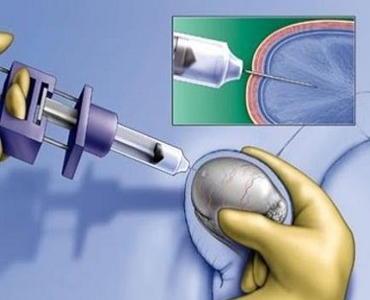
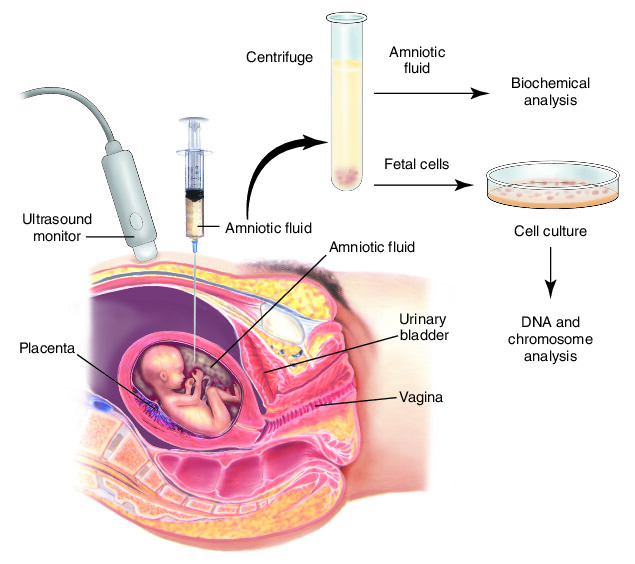
Amniocentesis is a prenatal diagnostic procedure used to detect chromosomal abnormalities, genetic disorders and certain birth defects in a developing baby. During the amniocentesis procedure, a small sample of amniotic fluid — the protective liquid surrounding the fetus inside the uterus — is carefully withdrawn using a thin needle guided by ultrasound. This fluid contains fetal cells that are sent to a laboratory for detailed chromosomal and genetic analysis. At IHR Kolkata, amniocentesis is performed by experienced fertility and prenatal specialists using advanced ultrasound-guided techniques to ensure maximum safety, precision and patient comfort. You can learn more about the general procedure from the Mayo Clinic's amniocentesis guide.
Unlike screening tests such as NIPT or first trimester screening that only estimate risk levels, the amniocentesis test provides a definitive diagnosis with over 99% accuracy for chromosomal conditions including Down syndrome (Trisomy 21), Trisomy 18, Trisomy 13, neural tube defects like spina bifida, and inherited genetic conditions such as thalassemia and cystic fibrosis. If you are already exploring fertility treatments at IHR, our specialists can seamlessly coordinate amniocentesis with your ongoing IVF treatment in Kolkata to ensure comprehensive care throughout your pregnancy journey.

When Is Amniocentesis Test Recommended?
Amniocentesis is not a routine test for all pregnancies. Your doctor may recommend the amniocentesis test in Kolkata at IHR if any of the following conditions apply:
- High-risk screening results: You received a positive or high-risk result from NIPT (Non-Invasive Prenatal Testing), first trimester screening (FTS), quadruple test, or triple marker test indicating elevated risk for Down syndrome or other chromosomal abnormalities.
- Advanced maternal age: You are 35 years or older at the time of delivery, as the risk of chromosomal abnormalities increases with maternal age.
- Previous affected pregnancy: A previous pregnancy was affected by a chromosomal condition such as Down syndrome or a neural tube defect.
- Family history of genetic disorders: You or your partner have a known family history of genetic conditions like thalassemia, cystic fibrosis, sickle cell disease, or muscular dystrophy.
- Ultrasound abnormalities: An anomaly scan or fetal ultrasound has detected structural findings that may suggest a chromosomal issue.
- Pregnancies through assisted reproduction: Couples who have conceived through ICSI or IVF may be advised prenatal genetic testing as part of their care plan, especially if there is a known genetic risk factor.
It is important to discuss all your options including genetic counselling with a specialist at IHR Kolkata before deciding on amniocentesis. According to the American College of Obstetricians and Gynecologists (ACOG), amniocentesis is one of the most reliable diagnostic tools available for prenatal genetic evaluation. Our team will help you understand the benefits, risks and what to expect at every step.
WHY CHOOSE IHR Kolkata for Amniocentesis Test?
At IHR Kolkata, we provide safe and accurate amniocentesis testing as part of our comprehensive prenatal care services. Our experienced specialists perform the amniocentesis procedure under real-time ultrasound guidance using the latest techniques to ensure patient safety and diagnostic accuracy. As a trusted name in fertility and prenatal care in Kolkata, we combine clinical expertise with compassionate support to help expectant parents navigate high-risk screening results and make informed decisions. To discuss your case with our specialists, book a consultation here.
Reasons To Choose IHR for Amniocentesis in Kolkata:

Why Parents Trust IHR Kolkata

99%+ Diagnostic Accuracy
Amniocentesis provides definitive results for chromosomal conditions, offering expectant parents confirmed answers rather than risk estimates.

Specialist-Led Procedure
Every amniocentesis at IHR is performed by experienced prenatal specialists using real-time ultrasound guidance for precision and safety.

Quick Results Turnaround
Preliminary FISH/PCR results available within 2–3 days and full karyotype analysis within 2–3 weeks for timely decision-making.
Trust & Accreditations

NABL Certified

NABH Accredited

ISO Quality Standards
Our laboratory follows global safety protocols and strict quality-control standards for all prenatal diagnostic tests including amniocentesis. Certifications available on request.
Book Amniocentesis Consultation
Amniocentesis Procedure – Step by Step

Step 1: Pre-Procedure Counselling
Genetic counselling to discuss the purpose, process, risks and expected outcomes of the amniocentesis test.

Step 2: Ultrasound Assessment
A detailed ultrasound is performed to confirm fetal position, placental location and identify a safe pocket of amniotic fluid.

Step 3: Skin Preparation
The abdomen is cleaned with antiseptic solution to maintain a sterile environment and prevent infection.

Step 4: Fluid Collection
A thin needle is inserted through the abdomen into the amniotic sac under continuous ultrasound guidance. About 15–20 ml of amniotic fluid is withdrawn.

Step 5: Post-Procedure Monitoring
Fetal heart rate is checked and the patient rests for approximately 30 minutes before going home. No hospital admission is required.
Step 6: Lab Analysis & Results
The amniotic fluid sample is sent for chromosomal analysis. Rapid results (FISH/PCR) in 2–3 days; full karyotype in 2–3 weeks.
The entire amniocentesis procedure typically takes 30 to 45 minutes including preparation and monitoring. The actual needle insertion and fluid withdrawal takes only 1–2 minutes. Patients are advised to avoid strenuous activity for 24 hours after the procedure and can resume normal activities thereafter.
Amniocentesis Test in Kolkata – When Do You Need It?
Many expectant parents wonder about the difference between amniocentesis and other prenatal tests such as NIPT. While NIPT is an excellent non-invasive screening tool performed through a simple blood draw, it only estimates the probability of chromosomal abnormalities. Amniocentesis, on the other hand, is a definitive diagnostic procedure that confirms or rules out conditions with over 99% accuracy.
Your doctor at IHR Kolkata may recommend amniocentesis if your NIPT or first trimester screening results indicate a high-risk pregnancy, if there are ultrasound findings that raise concern, if you have a family history of genetic disorders such as thalassemia or Down syndrome, or if you are of advanced maternal age (35 years or older). Couples who have conceived through assisted reproductive procedures like IUI or IVF may also benefit from prenatal diagnostic testing when there are additional risk factors.
At IHR, our specialists guide patients through the entire process — from pre-procedure counselling to interpreting results — ensuring clarity, comfort and informed decision-making at every step of prenatal genetic testing in Kolkata.
Amniocentesis vs NIPT – Key Differences
| Parameter | Amniocentesis | NIPT |
|---|---|---|
| Type | Diagnostic (definitive) | Screening (risk estimate) |
| Accuracy | Over 99% | 95–99% (screening only) |
| Timing | 15–20 weeks | 10+ weeks |
| Method | Needle-guided fluid sample | Blood draw (mother's blood) |
| Invasive? | Yes (minimally) | No |
| Detects | Chromosomal + genetic disorders | Chromosomal risk only |
| False Positives | Extremely rare | Possible |
What Can Amniocentesis Detect?
Definitive prenatal diagnosis for chromosomal and genetic conditions
Down Syndrome (Trisomy 21)
The most common chromosomal abnormality detected through amniocentesis, caused by an extra copy of chromosome 21.
Trisomy 18 & Trisomy 13
Edwards syndrome (Trisomy 18) and Patau syndrome (Trisomy 13), both serious chromosomal conditions confirmed through amniocentesis.
Neural Tube Defects
Conditions such as spina bifida and anencephaly detected through alpha-fetoprotein (AFP) levels in the amniotic fluid.
Thalassemia
An inherited blood disorder common in India. Amniocentesis can confirm if the fetus carries the thalassemia gene when both parents are carriers.
Cystic Fibrosis & Genetic Disorders
Single-gene inherited conditions can be tested when there is a known family history or carrier status identified through prior screening.
Fetal Infections
In certain cases, amniotic fluid may be tested using PCR to diagnose fetal infections such as toxoplasmosis or cytomegalovirus (CMV).
Amniocentesis – Patient Information & Guidelines
Before the Amniocentesis Procedure
- No special fasting or dietary restrictions are required
- You may eat and drink normally before the procedure
- Inform your doctor of any medications, bleeding disorders or allergies
- Genetic counselling is recommended before the test to discuss expectations

After the Amniocentesis Procedure
- Rest for 30 minutes at the clinic after the procedure
- Avoid strenuous physical activity for 24 hours
- Mild cramping or soreness at the needle site is normal
- Contact your doctor if you experience bleeding, fluid leakage, fever or severe cramping
Risks of Amniocentesis
- Miscarriage risk: approximately 0.1% to 0.3% (1 in 300 to 1 in 1,000)
- Minor cramping or spotting: occurs in about 1–2% of cases
- Amniotic fluid leakage, infection: rare (less than 1%)
- Rh-negative mothers receive anti-D immunoglobulin injection after the procedure
Results Timeline
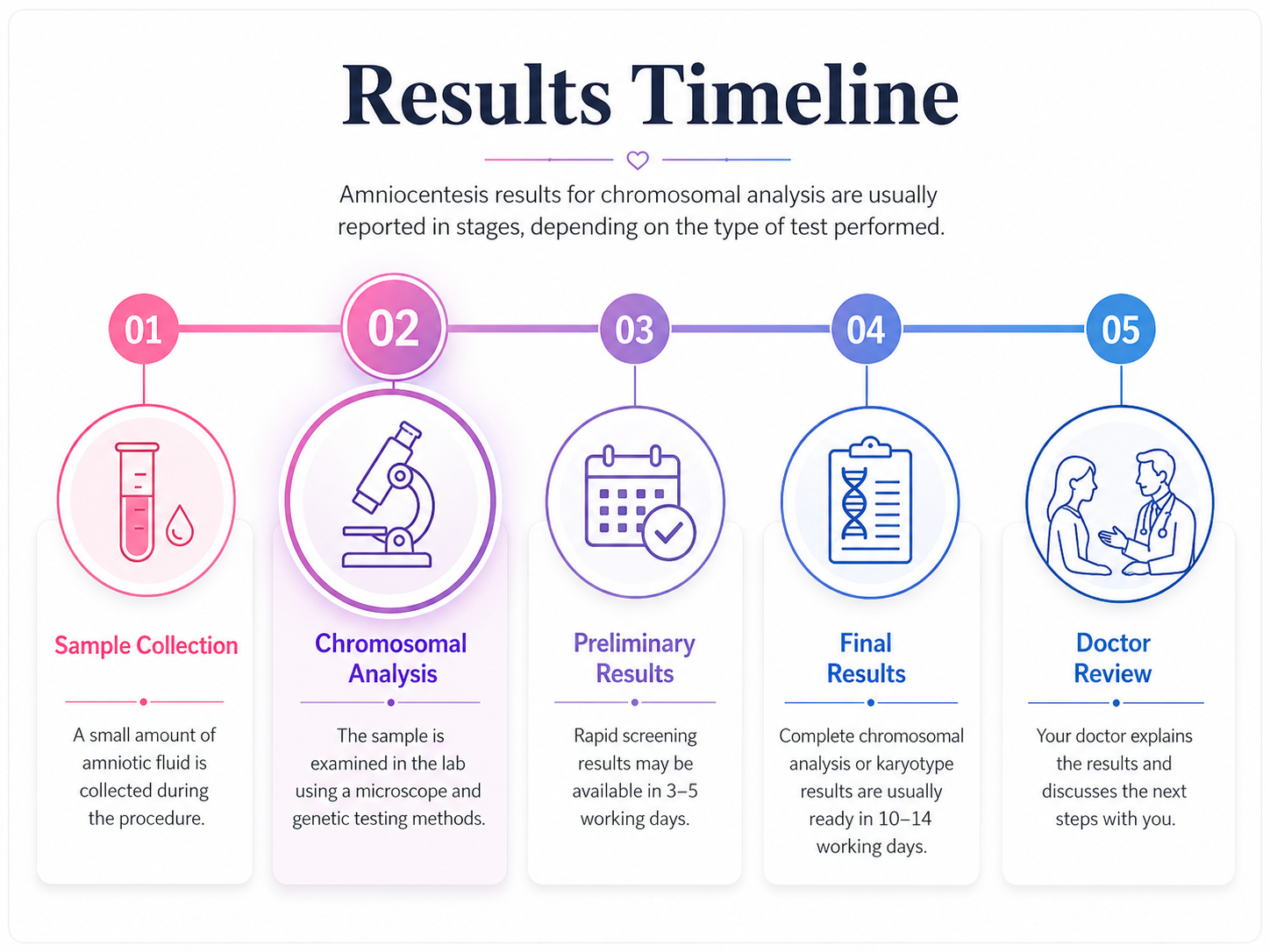
- Rapid results (FISH/PCR): 2–3 working days for common chromosomal conditions
- Full karyotype analysis: 2–3 weeks (fetal cells are cultured in the laboratory)
- Results are discussed in a follow-up consultation with your specialist
- Genetic counselling support is available for abnormal results
Our Other Services
IUI
IUI is a process in which healthy sperm is injected into the uterus around the time of ovulation.
Read More
IVF
IHR has the best IVF treatment in Kolkata with experienced IVF specialists for successful outcomes.
Read More
ICSI
Intracytoplasmic sperm injection involves injecting a single sperm directly into the egg.
Read More