What is Surrogacy?
The word surrogate is rooted in Latin SUBROGARE (to substitute) that is "appointed to act in place of". Surrogacy implies that a woman becomes pregnant and gives birth to a child with the intention of giving away this child to another person or couple, commonly referred to as "intended" or "commissioning" couple.
The earliest known description of surrogacy is claimed to be the servant Hagar begetting a child for the childless Sarah through her husband Abraham, described in the biblical book of genesis.
In Hindu mythology, despite taking birth from the womb of Rohini, Balram is regarded as the son of mother Devaki.
There are two main kinds of surrogacy, Traditional and Gestational. Surrogacy can be commercial or altruistic depending upon whether the surrogate receives a financial reward for her pregnancy. If she receives money for the surrogacy arrangement it's considered Commercial Surrogacy and if she receives no compensation beyond reimbursement of her medical and other pregnancy-related expenses along with the insurance coverage for her, it is Altruistic Surrogacy.
Types of Surrogacy
Traditional Surrogacy
Traditional Surrogacy is also commonly known as Genetic Surrogacy, Partial Surrogacy, or Straight Surrogacy. It is the result of artificial insemination of the surrogate mother with the intended father's sperm which means the surrogate mother's eggs are used, making her a genetic parent along with the intended father. In view of the genetic involvement of traditional surrogate, this is no longer practiced worldwide.
According to an International Federation Of Gynecology and Obstetrics (FIGO) committee and Indian Council of Medical Research (ICMR) report, only gestational surrogacy is nowadays acceptable.
Gestational Surrogacy
Gestational Surrogacy is also commonly known as IVF Surrogacy, Host Surrogacy, or Full Surrogacy. It is defined as an arrangement in which an embryo from the intended parents is transferred to the surrogate's uterus. The surrogate here has no genetic connection to the child.
The first successful IVF surrogacy was reported in 1985 in the USA.
When Surrogacy May Be an Option
Surrogacy may be considered in a variety of medical and personal circumstances. Here are the conditions where surrogacy could be a viable path to parenthood:
Our Surrogacy Program Highlights

Structured & Safe Program
A seamless surrogacy program with clearly defined stages, legal compliance and comprehensive medical care from start to finish.

Complete Guidance & Support
From treatment plans and legalities to payment structure — all your concerns are addressed during the first consultation itself.

Experienced Fertility Specialists
Our team of experienced doctors, embryologists and support staff collaborate to offer the best possible surrogacy outcomes.
Trust & Accreditations

NABL Certified

NABH Accredited

ISO Quality Standards
Our lab follows global safety protocols and strict quality-control standards. Certifications available on request.
Book Surrogacy Consultation
Stages of Surrogacy at IHR Kolkata

Step 1: Searching of Surrogate

Step 2: Selection of Surrogate

Step 3: Counseling of Surrogate

Step 4: Investigation of Surrogate
At IHR we try to make the whole surrogacy program seamless and safe. The first surrogacy consultation will involve discussing in detail the procedure involved in surrogacy. Our consultants will address all your concerns and queries in relation to surrogacy.
Surrogacy Stages – Detailed Process at IHR
1. Searching of Surrogate
They are selected via surrogacy agencies. These agencies employ an agent who searches for potential surrogate mothers and counsels them about the process of surrogacy. These agencies screen the family background of the surrogate mother and make sure there is no criminal history. A medical social worker (MSW) is appointed for each surrogate. This MSW acts as a chaperone to the surrogate and provides support and guidance to the surrogate through the surrogacy process. This process of searching may require 1–4 months.
Or intended parents can also bring their own surrogate who can also be a relative. This can save a lot of time and expense. In the case of a relative acting as a surrogate, the relative should belong to the same generation as the woman desiring the surrogate.
2. Selection of Surrogate
- Should be between the ages of 25–35 years.
- Should be married (marriage certificate as proof is essential)
- Should have at least one biological child from her marriage
- Previous pregnancy should be full-term and uncomplicated.
- A surrogate cannot have more than 4 children including her biological children and children born through surrogacy.
- Husband's consent is necessary.
- If husband passed away, a death certificate is necessary. Also, the consent of a guardian is necessary.
- They should be of a height of 4 feet 10 inches minimum.
3. Counselling of Surrogate
- Implication of IVF & surrogacy.
- Possibility of multiple pregnancies.
- Social implications.
- Psychological risks.
- Sense of bereavement while giving away baby.
- Consent in giving up all parental rights over the child.
- Possibilities of complications or side effects that may occur during the treatment procedure and pregnancy.
4. Investigations of the Surrogate
General Physical Examination:
Height, Weight, Pulse, Blood pressure, Temperature, Respiratory System, Cardiovascular System, Per abdominal examination, Per speculum examination, Per vaginal examination
Blood Investigation:
CBC, Hb typing to rule out Thalassemia, ABO & Rh typing, Random Blood Sugar, LFT, RFT, Serology (HIV, HCV, HbsAg, VDRL), Thyroid, Prolactin
Others:
Urine routine, HSG, ECG, Chest X-Ray, Hysteroscopy, Ultrasound whole abdomen, and 3D TVS.
What Your Surrogacy Consultation Covers
At the end of your first consultation, you will get a fair idea about:
Treatment Plans & Costs
Complete overview of the surrogacy treatment plan and associated costs explained transparently.
Stages in Treatment Plan
Understand each stage of the surrogacy process — from surrogate search to delivery.
Time Required for Each Procedure
Know the timeline for each step so you can plan your visits and schedule accordingly.
When You Need to Be Present
Clear guidance on which procedures require your physical presence and for how long.
Procedures Included in Package
Full breakdown of what is included in the surrogacy package at IHR.
Additional Costs
Transparent information about any additional procedures you may need to pay for separately.
Surrogacy: Guidelines To Follow
Registration & Legal Requirements
- Surrogacy can be done only by the ART clinic that is registered under the National Registry of ART Clinic & Banks, ICMR.
- Sex selection at any stage after fertilization or abortion of foetus of any particular sex is not permitted, except to avoid the risk of transmission of a genetic abnormality.
- No more than three embryos are placed in a woman during any one treatment cycle, excepting under exceptional circumstances (elderly women above 37, poor embryo quality).
Eligibility for Surrogacy
- Single mothers or single fathers can commission surrogacy provided they can provide their reproductive gametes and are resident Indian Nationals.
- The only "couples" eligible for ART shall be those "having a sexual relationship that is legal in India."
- Same-sex couples are not eligible.
- Foreigners cannot avail surrogacy services in India. (Annexure I & Annexure II)
Donor & Surrogate Rules
- In case either intended parent is unable to produce gamete, an egg/sperm donor may be used. But both gametes from the donor (Embryo Donation) are not allowed.
- The third-party donor of sperm or eggs is always informed that the offspring will not know his/her identity.
- A surrogate mother cannot act as an egg donor.
- An egg donor cannot act as a surrogate mother for the couple to whom the egg is being donated.
- A third party egg/sperm donor and a surrogate mother must relinquish in writing all parental rights concerning the offspring.
Donor Information for Parents
The intended parents will not know the identity of the sperm/egg donor. Intended parents will be provided the following information regarding the donor: height, weight, skin color, educational qualification, profession, family background, freedom from any known disease or carrier status (such as hepatitis B or AIDS), ethnic origin, before accepting the donor.
Guidelines for Intended Parents
Agreement & Financial Responsibility
- The intended parent(s) will have to enter into an agreement with the surrogate mother.
- The intended parent(s) will bear all expenditure incurred on medical tests and treatment, food, health insurance, compensation, and other requirements of the surrogate mother.
- The intended parent(s) will also provide monetary compensation to the surrogate for carrying out surrogacy.
Multiple Pregnancy & eSET
There is always a possibility of multiple pregnancies. If the intended parents don't want it, there is an option of elective Single Embryo Transfer (eSET) which will reduce the chances of multiple pregnancies significantly.
Birth Certificate
The birth certificate of the child shall bear the names of the intended parents even if an egg/sperm donor was used.
Parental Responsibility
The Indian Law makes it mandatory for the intended parents to take the responsibility of the child thus born and parents have to accept the child irrespective of any abnormality and a refusal to do so would constitute an offence.
Single Parent Surrogacy
Single mothers or single fathers can commission surrogacy and will have full rights on the child born through surrogacy agreement. (Assisted Reproductive Technology Act 2008 under Sec 32). In the case of single-parent surrogacy, issuing birth certificates is slightly complicated — single parents should submit an affidavit that the child was conceived using an egg/sperm donor to the local municipal authorities.
Our Other Services
IUI
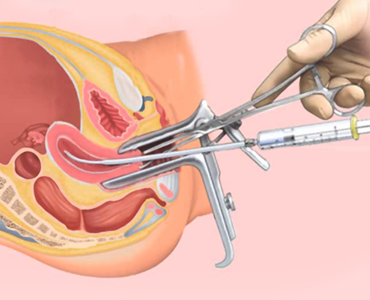
IUI is a process in which healthy sperm is injected into the uterus around the time of ovulation.
Read More
IVF
IHR has the best IVF treatment in Kolkata and the best IVF specialists for successful outcomes.
Read More
ICSI
Intracytoplasmic sperm injection involves injecting a single sperm directly into the egg.
Read More