

Infertility is not just a women’s health issue; men can also face challenges when trying to start a family. Studies show that male infertility accounts for almost half of all infertility cases, which means both partners need to pay equal attention to their reproductive health. Yet, many men avoid seeking help due to hesitation, lack of awareness, or the belief that infertility is only a woman’s problem.
The truth is that infertility is a medical condition, not a personal weakness. If you and your partner have been trying to conceive for a long time without success, visiting a doctor at the right time can make a big difference. Early medical guidance not only helps identify the root cause but also increases the chances of effective treatment through lifestyle changes, medicines, or advanced fertility options.
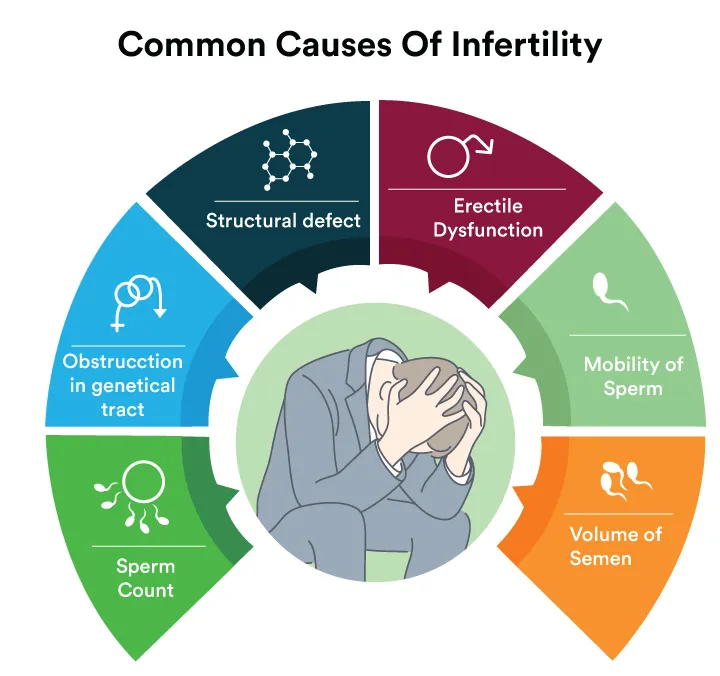
What Is Male Infertility?
Male infertility means that a man has a problem with his reproductive system that reduces the chance of causing pregnancy in his partner. This could happen due to low sperm count, poor sperm quality, or blockages in the reproductive tract.
Infertility is usually diagnosed after a couple fails to conceive after 12 months of regular, unprotected intercourse. In some cases, medical help should be sought earlier, depending on symptoms.
Common Symptoms of Male Infertility
Male infertility often shows no obvious signs other than the inability to conceive. However, some symptoms can indicate underlying health problems.
Problems with sexual function – difficulty maintaining an erection or reduced sexual desire.
Pain, swelling, or lumps in the testicle area.
Abnormal breast growth (gynecomastia).
Decreased body or facial hair (indicating hormonal imbalance).
Frequent respiratory infections (sometimes linked to genetic causes).
Low sperm count or poor sperm motility (found through semen analysis).
If you notice one or more of these male infertility symptoms, it is important to visit a doctor without delay.
When Should You See a Doctor for Male Infertility?
Many couples wonder how long they should wait before consulting a fertility specialist. Here are the situations where seeing a doctor for male infertility concerns is highly recommended:
- If you and your partner have been trying for over 12 months without success (6 months if your partner is above 35).
- If you have a history of testicle problems, such as undescended testicles or injury.
- If you have undergone cancer treatments, such as chemotherapy or radiation.
- If you have sexual dysfunction issues, such as erectile dysfunction or low libido.
- If you notice testicular pain, swelling, or lumps.
- If you have had surgeries in the groin or scrotum area.
- If you have abnormal semen test results (low sperm count, no sperm, or poor quality sperm).
Causes of Male Infertility
Several factors can contribute to male infertility. Understanding the causes can help in choosing the right treatment.
1. Medical Causes
- Varicocele (swelling of veins in the scrotum).
- Infections affecting sperm production or transport.
- Hormonal imbalance.
- Genetic conditions.
- Ejaculation issues.
2. Lifestyle Factors
- Smoking, alcohol, and drug use.
- Being overweight or obese.
- High stress levels.
- Poor diet and lack of exercise.
3. Environmental Causes
- Exposure to toxins, pesticides, or radiation.
- Frequent use of hot tubs or saunas (overheating the testicles).
How Is Male Infertility Diagnosed?
When you visit a doctor for male infertility concerns, they may recommend different tests.
- Medical History & Physical Examination – to check general health, testicles, and hormone levels.
- Semen Analysis – the most common test, which checks sperm count, motility, and shape.
- Hormone Testing – to measure testosterone and other hormones.
- Scrotal Ultrasound – to detect varicocele or structural problems.
- Genetic Testing – if low sperm count has no obvious cause.
Male Infertility Treatment Options
The good news is that many men with infertility problems can be treated successfully. The treatment depends on the underlying cause.
1. Medical Treatments
- Medications to treat infections or hormonal issues.
- Surgery for conditions like varicocele or blocked tubes.
2. Assisted Reproductive Techniques (ART)
When natural methods or basic treatments are not enough, doctors may suggest Assisted Reproductive Techniques (ART). These are advanced medical procedures that help couples conceive by overcoming sperm-related problems. The three most common options are:
- Intrauterine Insemination (IUI):
In this process, healthy and active sperm are collected, washed, and then placed directly into the woman’s uterus during ovulation. This increases the chances of the sperm reaching and fertilizing the egg. IUI treatment in Kolkata is often recommended for men with mild fertility issues such as slightly low sperm count, poor motility, or ejaculation problems. - In Vitro Fertilization (IVF):
IVF is one of the most widely known fertility treatments. Here, eggs are collected from the woman and combined with sperm in a lab to create embryos. The healthiest embryo is then placed back into the uterus. IVF treatment in Kolkata is usually advised when there are more serious male infertility concerns, such as very low sperm count or unexplained infertility. - Intracytoplasmic Sperm Injection (ICSI):
ICSI is a highly advanced form of IVF where a single healthy sperm is carefully injected into an egg under a microscope. This is especially helpful in cases of severe male infertility, such as when sperm count is extremely low or sperm cannot move properly. With ICSI treatment in Kolkata, many couples who had very low chances with standard IVF are able to achieve pregnancy successfully.
These advanced ART methods give hope to couples facing complex fertility challenges. A fertility specialist can guide you on whether IUI, IVF, or ICSI is the best choice based on your test results and overall health.
3. Lifestyle Changes
- Quitting smoking and alcohol.
- Eating a healthy diet rich in vitamins and antioxidants.
- Exercising regularly to maintain a healthy weight.
- Managing stress with yoga or meditation.
Emotional Impact of Male Infertility
Male infertility does not only affect physical health; it also impacts emotional well-being. Many men experience stress, anxiety, or low self-esteem. Couples may also face relationship pressure.
Seeking support from a counselor, support groups, or fertility specialists can help cope with these challenges. Remember, infertility is a medical condition, not a reflection of masculinity.
Tips for Men to Boost Fertility Naturally
While medical treatment may be necessary, some simple lifestyle changes can improve sperm health:
- Eat more fruits, vegetables, whole grains, and lean proteins.
- Stay physically active but avoid overtraining.
- Get enough sleep.
- Avoid tight underwear to prevent overheating of testicles.
- Limit exposure to chemicals and toxins.
Conclusion
If you and your partner are struggling to conceive, it is important not to delay seeking medical advice. Understanding when to see a doctor for male infertility concerns can save time, reduce stress, and improve your chances of finding the right treatment. With options like IUI, IVF, ICSI, and lifestyle changes, many men are now able to overcome infertility challenges and achieve their dream of parenthood.
For couples looking for expert care and advanced fertility solutions, consulting the Best IVF Centre in Kolkata can be a life-changing step. Experienced specialists can provide personalized treatment plans, guidance, and support throughout your journey. Don’t wait—take the first step today, book an appointment, and move closer to building the family you’ve always wished for.
.png) (+91) 9864103333
(+91) 9864103333 (+91) 9435502020


